
If you ask someone what to see in Béziers, they’ll likely mention the cathedral, the Canal du Midi or the sweeping views across the Languedoc vineyards. Very few will say: Go walk across the bridge.
And it makes sense… If you arrive in Béziers by train or car, your eyes go straight to the cathedral. It’s dramatic. Elevated. Impossible to ignore.
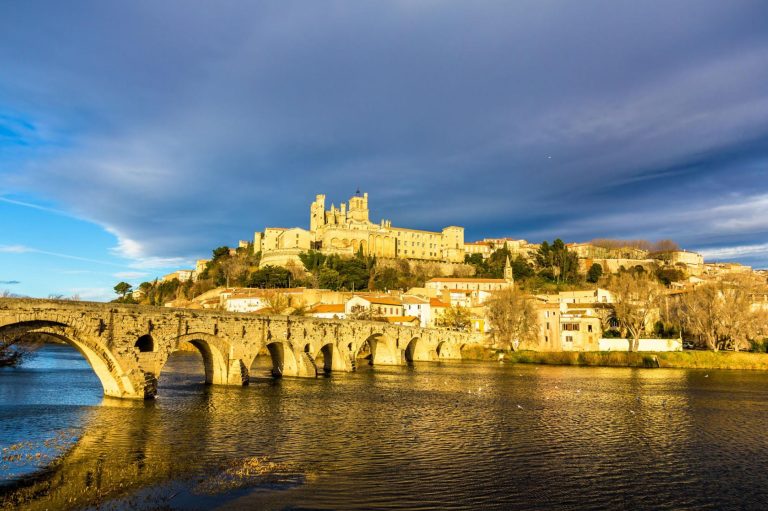
But if you approach the city on foot, along the Orb River, something else quietly commands your attention first: the Pont Vieux de Béziers.
At first glance, it looks like what it is — an old stone bridge. But this bridge is not decorative. It is not romantic in the fairytale sense. It is older than most countries, older than the Gothic cathedral above it.
When you cross it, you are not just crossing water. You are walking across eight centuries of survival.
Once you know a few of its quieter stories, it’s impossible to see it as “just a bridge” again.
The River Beneath It Looks Deceptively Calm
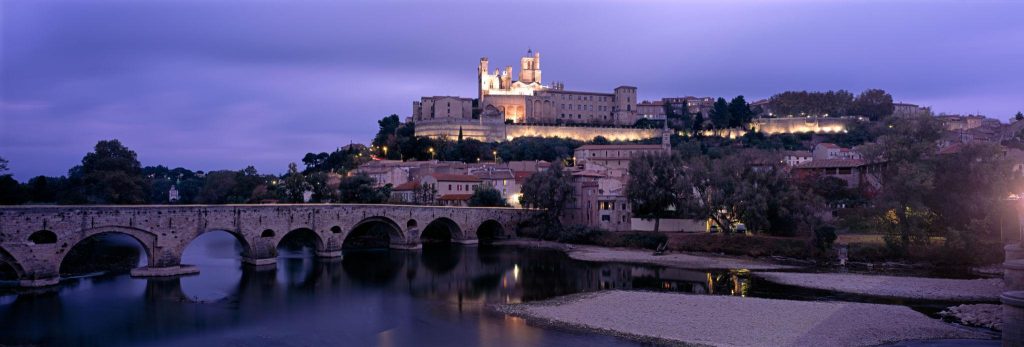
The Orb is a mountain river at heart. Storms in the Cévennes can send water rushing south hours later, raising the river level quickly. What appears calm in the afternoon can feel forceful by evening.
It Was Once Slightly Longer Than What You See Today
The bridge originally had more arches. Over time, river management and urban development altered the banks of the Orb, reducing the visible spans. What you cross now is essentially the streamlined version — trimmed by centuries of practical adaptation.
The Cutwaters Are Doing More Work Than You Think
Those pointed stone projections at the base of the piers? They’re not decorative. They split the river’s current during heavy flow, reducing pressure on the structure. Medieval engineers understood hydraulics better than we often give them credit for.
It Was Once a Controlled Entry Point
In medieval times, bridges were strategic assets. The Pont Vieux wasn’t just a crossing — it functioned as part of the city’s defensive system. Approaching the city meant funneling through a narrow, elevated entry before reaching fortified gates above.
It Helped Shape the City’s Approach
Before modern roads, this was the southern entrance to Béziers. The slight curve, the narrowing approach, the rise toward the fortified gates above — all of it shaped how travelers experienced arrival. Medieval cities were very aware of presentation.
It Quietly Survived Modernization
In the 19th and 20th centuries, many medieval bridges were widened, rebuilt, or demolished to accommodate traffic. Béziers built new crossings instead — which allowed the Pont Vieux to remain intact rather than being “improved.”
Engineering that outlived Revolutions
Over the centuries, the bridge has endured:
- Religious wars
- The French Revolution
- Industrial development
- Modern road construction
- Two World Wars
- Repeated river flooding
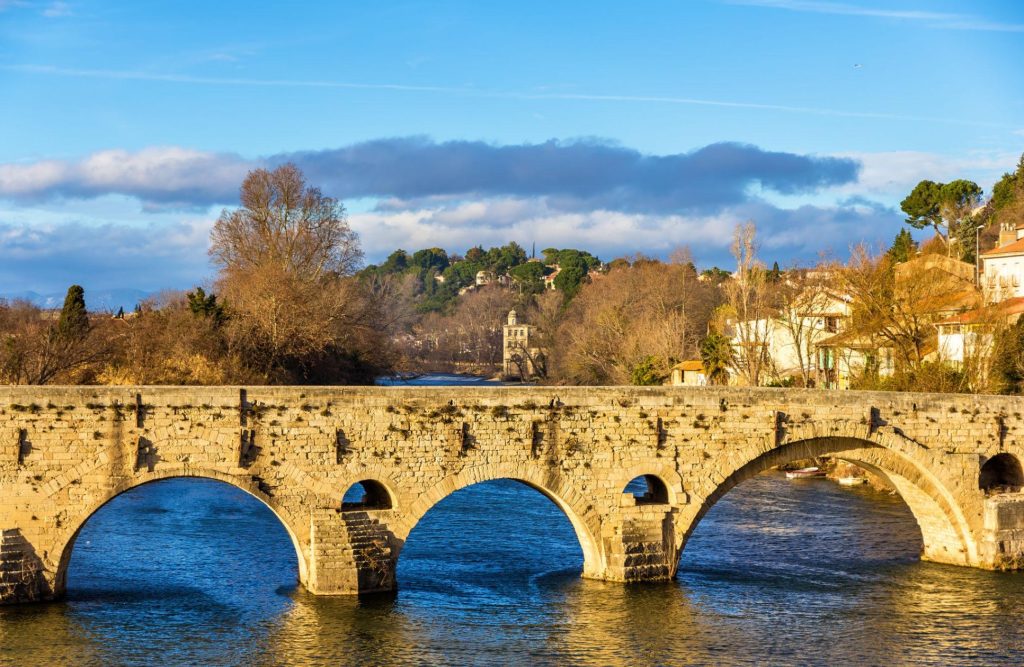
Unlike many medieval structures that were dismantled, replaced, or heavily modernized, the Pont Vieux remains largely intact in its original form. And even with all that history, the amazing part is that it’s still in use today.
A 12th-Century Bridge You Can Still Casually Walk Across
The Pont Vieux dates to the 12th century, making it one of the oldest medieval bridges in the Hérault region still in use today. When it was first built, Béziers was already an important trading center, and a reliable crossing over the Orb River was essential.
The current Cathédrale Saint-Nazaire de Béziers above it was largely rebuilt beginning in the 13th century. In other words, this bridge was already standing when the Gothic skyline began to take shape.
Today, you can cross it with groceries in hand or pause midway for a photograph. No ceremony required.
On one trip I was watching a small group cross, no one was particularly impressed. They were still talking about lunch. Once they reached the center, and spotted the cathedral in the late light, the conversation stopped gradually. It was the kind of moment where people realize they’re standing inside a postcard they didn’t plan for.
The Arches Tell the Real Story
If you pause halfway across and really look, you’ll notice the arches aren’t perfectly symmetrical.
They weren’t meant to be.
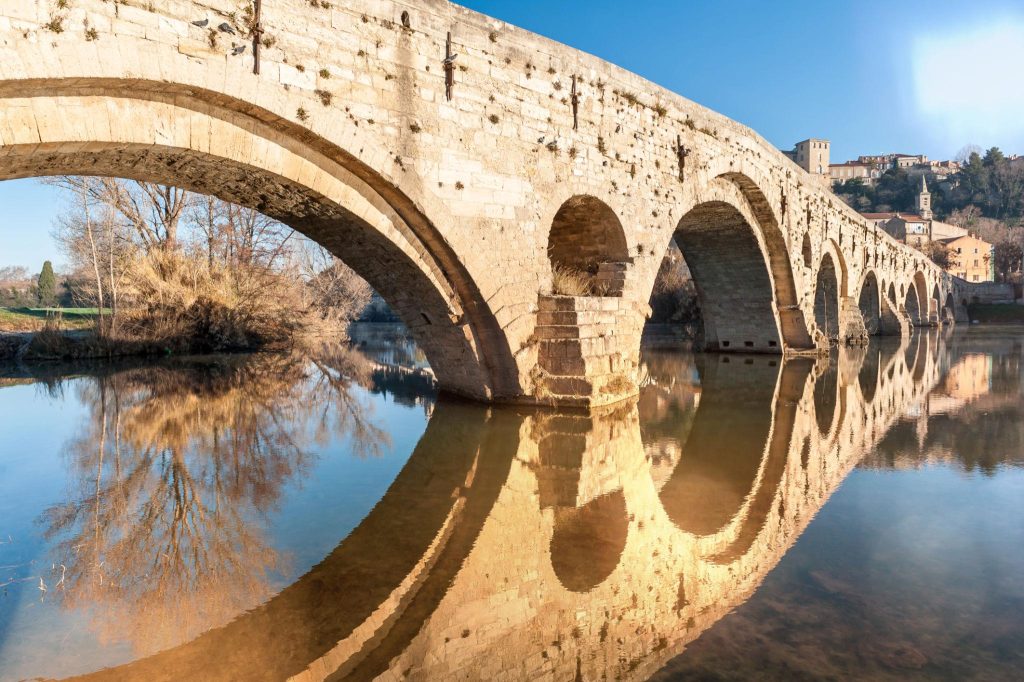
Medieval builders worked with the river’s contours. Each span was adjusted to respond to the terrain and water levels of the Orb. What might look uneven to modern eyes is actually evidence of practical, responsive engineering.
The result is a bridge that has quietly endured for more than eight centuries.
The Bridge That Watched Béziers Burn
There’s one detail about the Pont Vieux de Béziers that tends to surprise people.
In the year 1209, Béziers was attacked during the Albigensian Crusade — an event dramatic enough that it still shows up in history books. Much of the city above was destroyed. The skyline you see today was largely reshaped in the years that followed, including the rebuilding of the Cathédrale Saint-Nazaire de Béziers.
The bridge?
Still there.
Cathedrals can be rebuilt. Political powers shift… but a solid stone bridge across the only convenient river crossing? That tends to survive.
The View That Frames Béziers
Here’s something I often point out to guests:
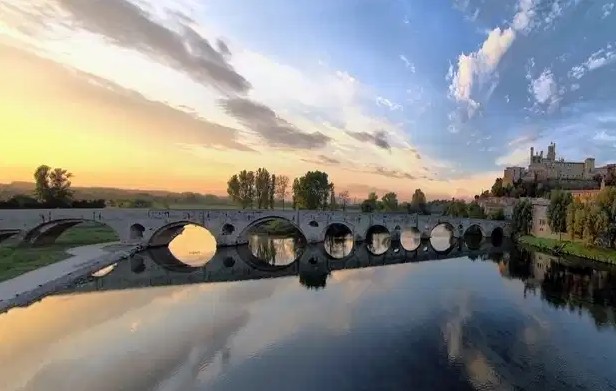
The classic view of Béziers — cathedral rising above the river, stone glowing in the afternoon light — is best appreciated from this bridge.
Stand at the center and turn toward the old town. The cathedral dominates the skyline exactly as it would have centuries ago for travelers approaching on foot.
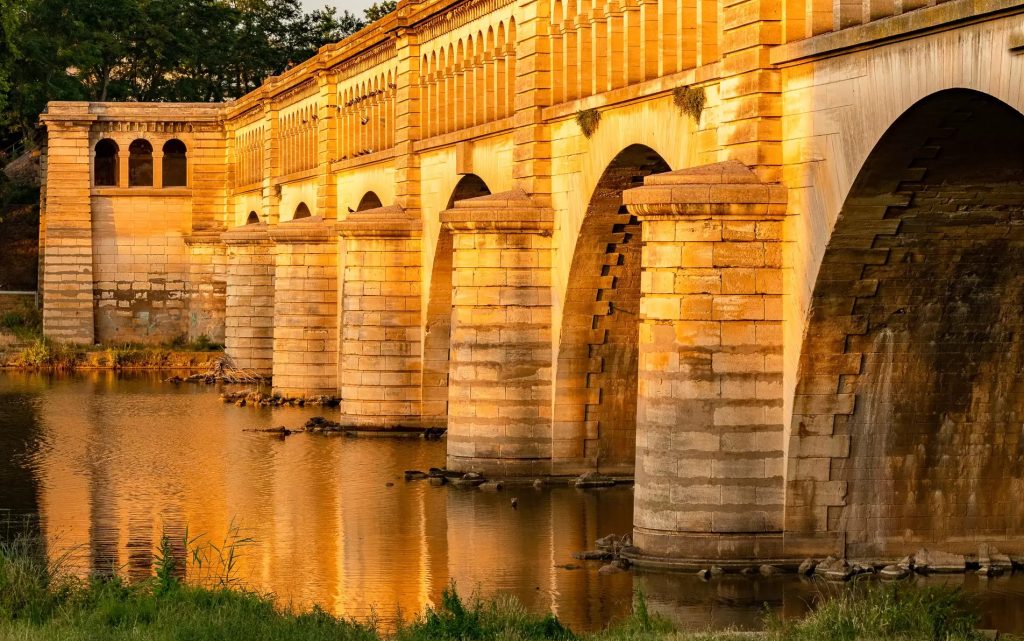
And in another direction, you’ll see the Orb aqueduct.
Why This Is Actually Interesting
From almost the same vantage point in Béziers, you can see:
- A 12th-century medieval bridge built for carts and commerce
- A 19th-century aqueduct built for industrial canal navigation
Two entirely different eras solving the same geographic problem:
How do we get across this river?
And they solved it in completely different ways. That’s very Béziers
Visiting the Pont Vieux de Béziers
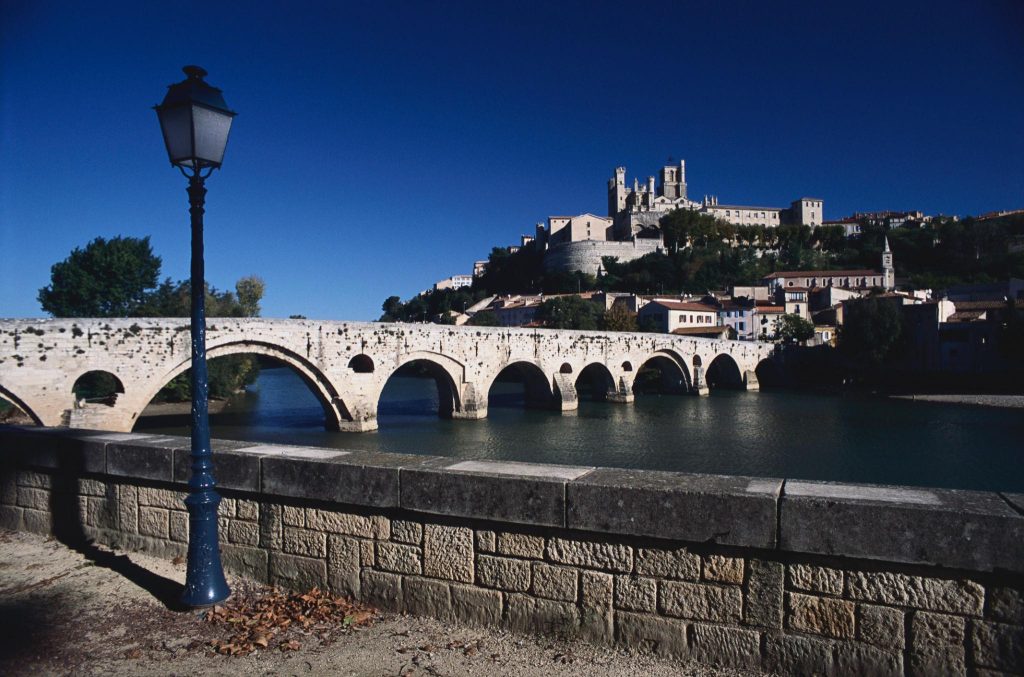
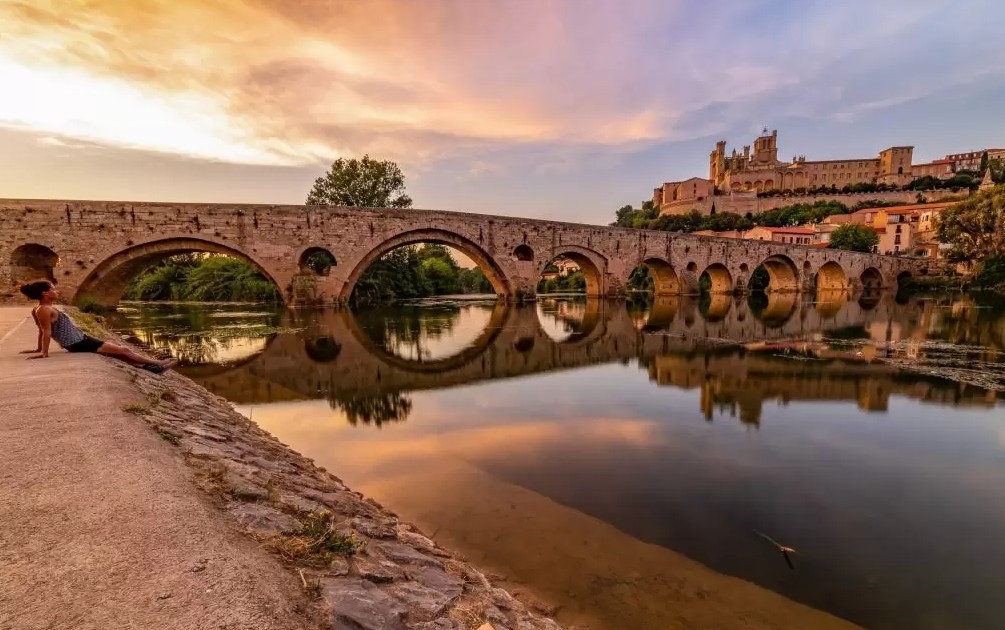
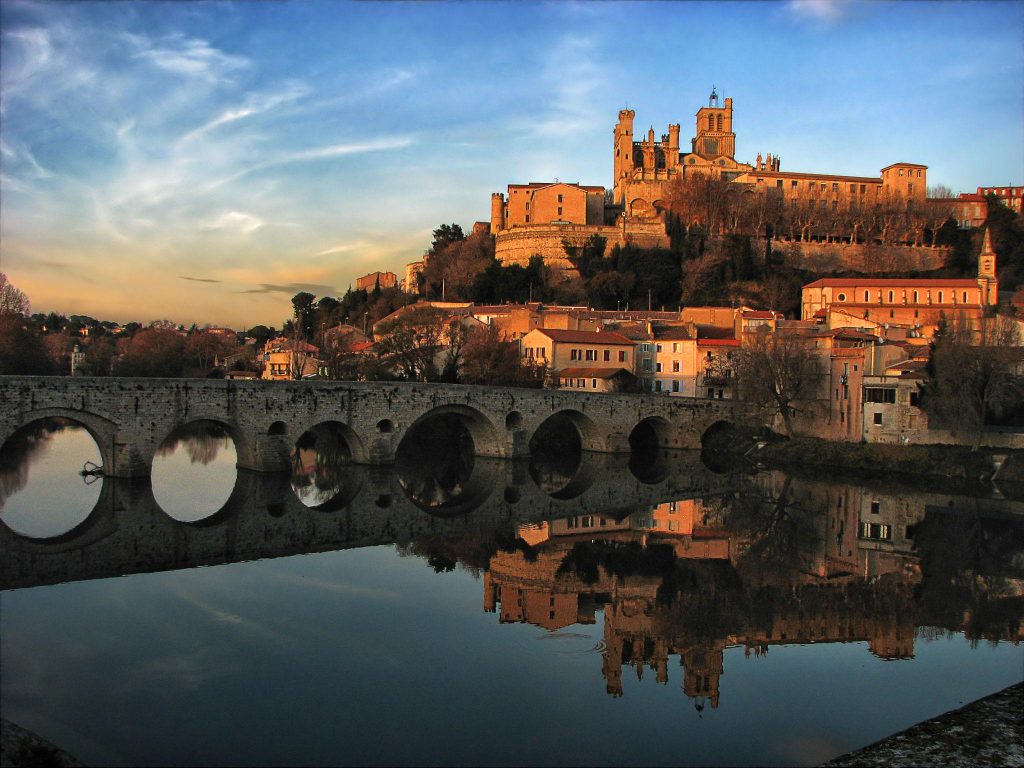
- Location: Connects the old town of Béziers to the south bank of the Orb River. An easy 5–10 minute walk from Cathédrale Saint-Nazaire.
- Cost: Free. Open at all times.
- Best time to walk: Late afternoon for cathedral light and layered skyline views. Early morning for quiet atmosphere.
- Photography tip: Stand toward the old-town side and look toward the cathedral for the most balanced framing of the scene.
- After heavy rain: The Orb runs faster and higher — a good moment to notice the medieval engineering at work.
- Pair it with: A stroll up to the cathedral, or a walk down toward the Canal du Midi locks for contrast between medieval and 17th-century infrastructure.
This one’s definitely worth a detour in our book!
Powered by GetYourGuide