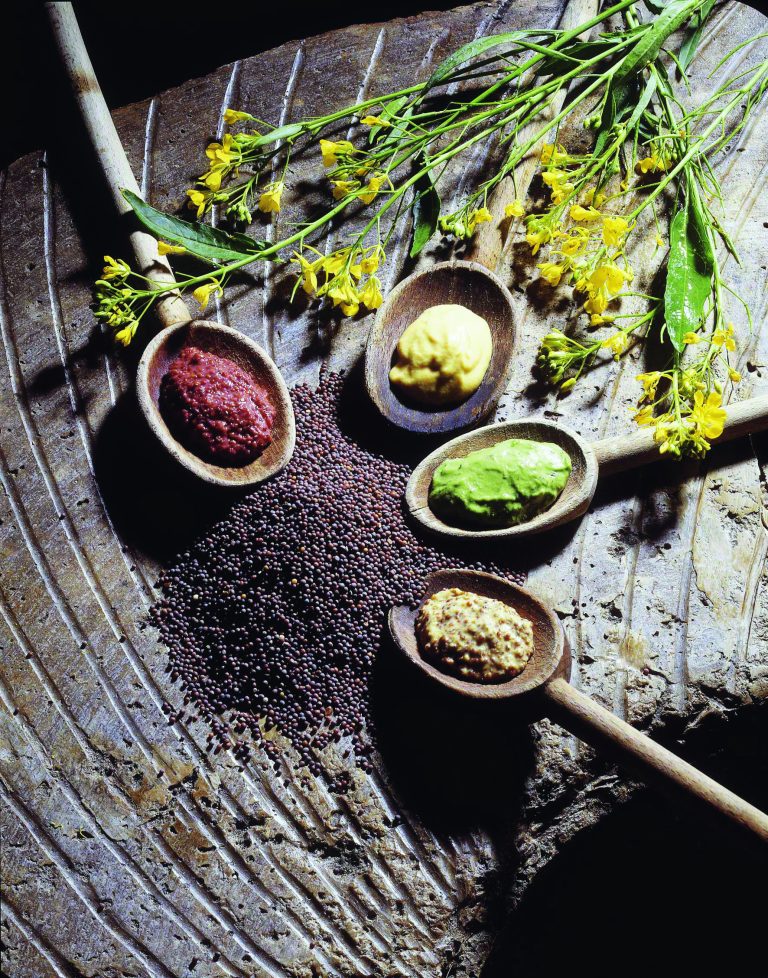
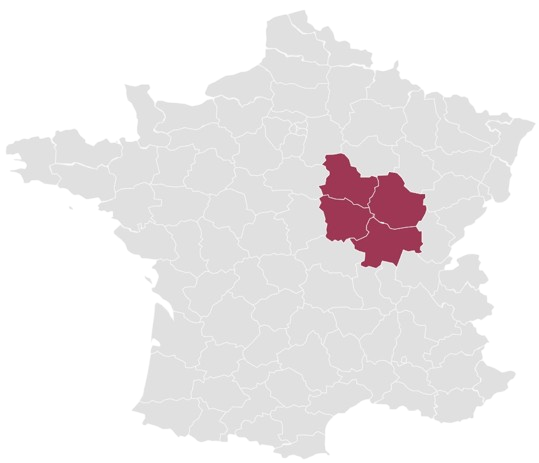

Burgundy may be known for its wine and mustard, but one of its most enduring traditions is something far sweeter—and far less expected.
In Dijon, the art of pain d’épices (spice bread, not gingerbread) has been passed down for generations, and nowhere is it more beautifully preserved than at Mulot & Petitjean.
A Burgundy Specialty with Deep Roots
Pain d’épices has been around in Burgundy for a very long time, and like so many great French specialties, it started with something quite simple. Back in the Middle Ages, spiced honey bread began appearing across Europe, finding its way into castles, convents, and eventually everyday life.
In Burgundy, the story goes that Marguerite of Flanders, the wife of Philip the Bold, helped introduce an early version of it to the ducal court. She brought back something called boichet from her travels, a kind of ancestor to today’s gingerbread, made with wheat flour and honey.
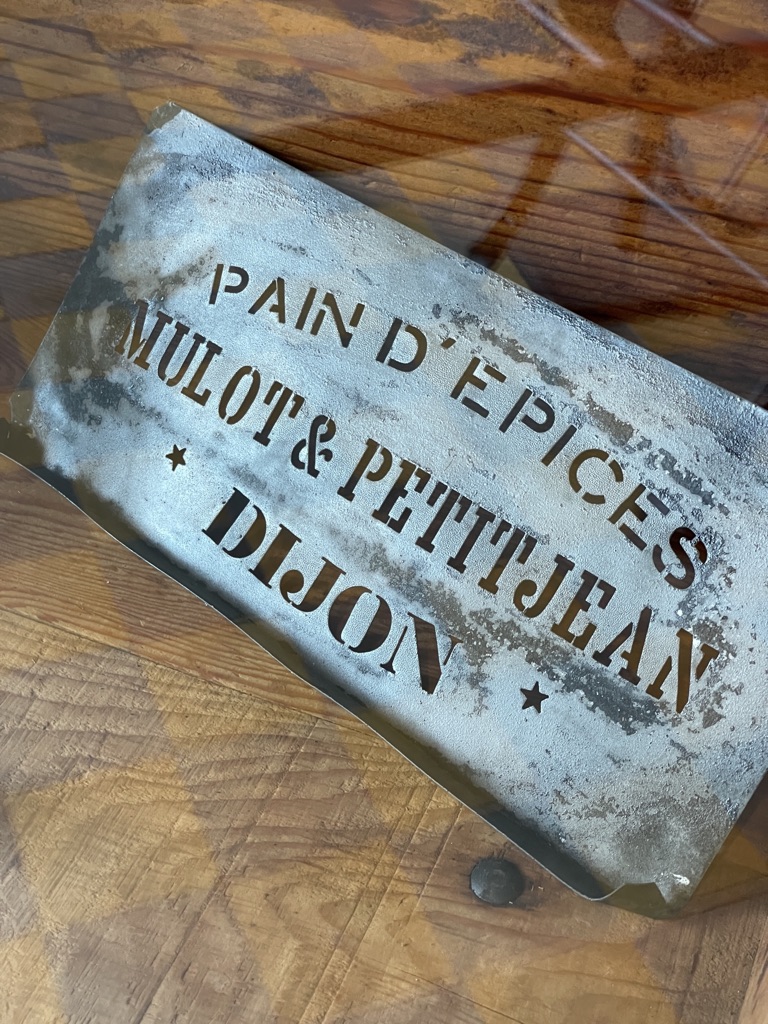
Over the centuries, Dijon became especially known for pain d’épices. At one point, the city had around a dozen gingerbread makers. Today, only one remains: Mulot & Petitjean.
That alone makes a visit feel special. But what I love is that it doesn’t feel like a relic from the past. It feels like a tradition Dijon has quietly held onto while so much else has changed.
Stepping Inside Mulot & Petitjean
As the door opens, I’m immediately greeted by the warm, comforting aroma of honey, cinnamon, and just a hint of exotic spice. It feels almost like stepping into a grandmother’s kitchen—if your grandmother had shelves lined with beautifully crafted tins and generations of baking behind her. There’s that same sense of warmth and anticipation, as if something delicious has just come out of the oven.
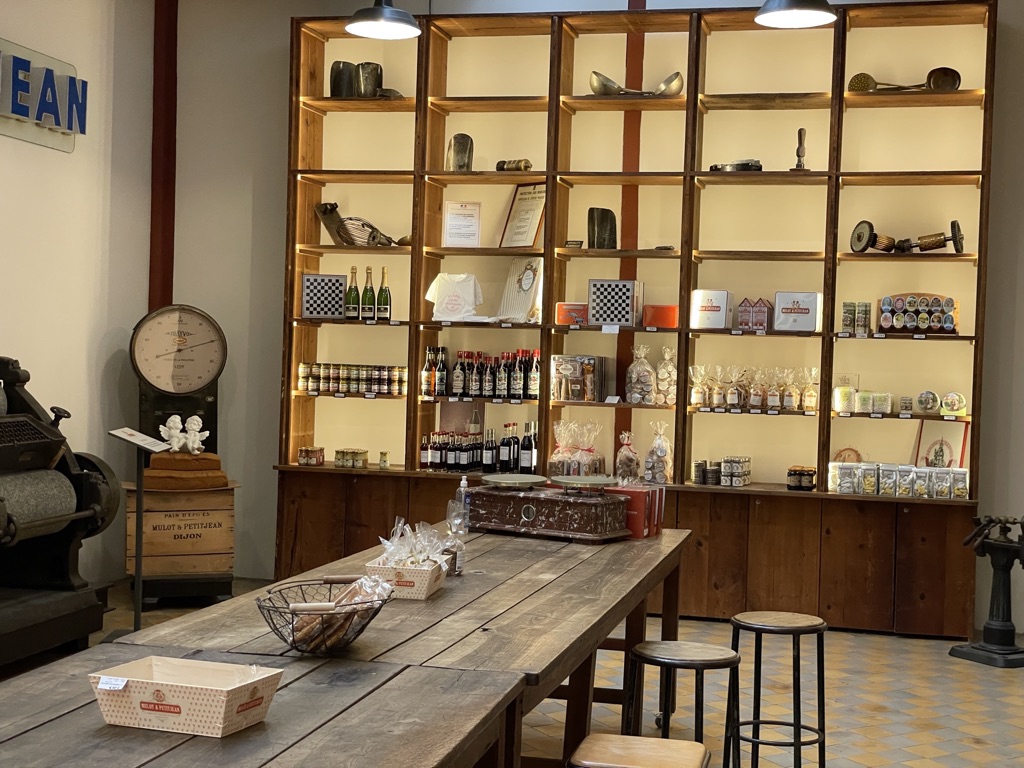
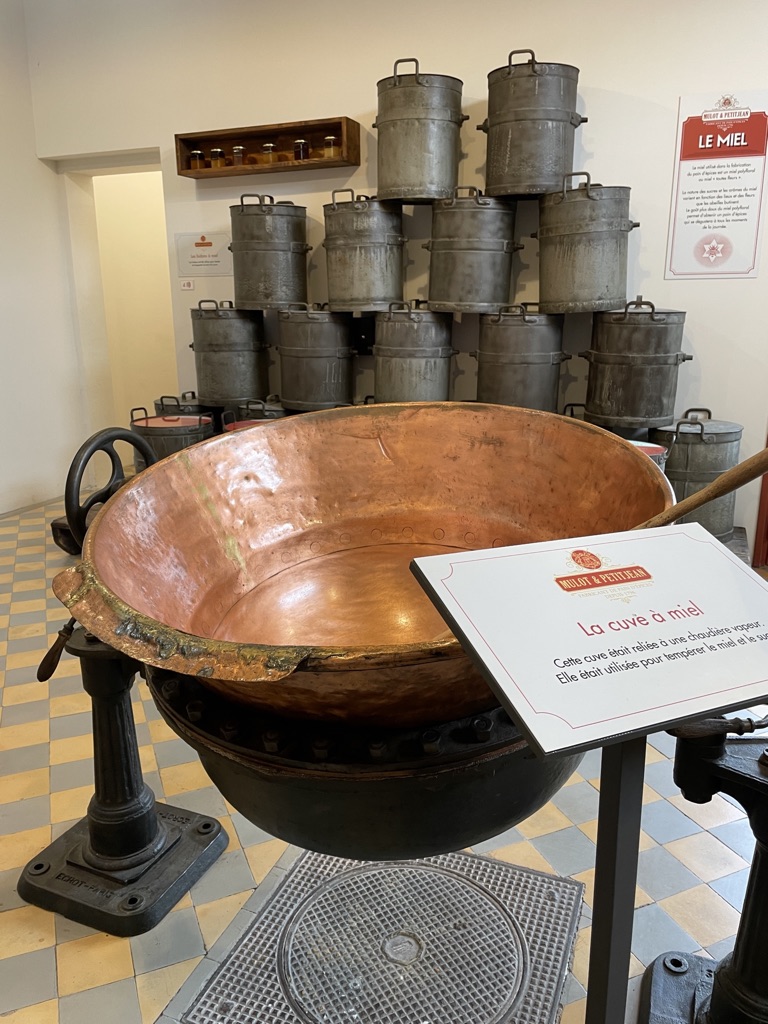
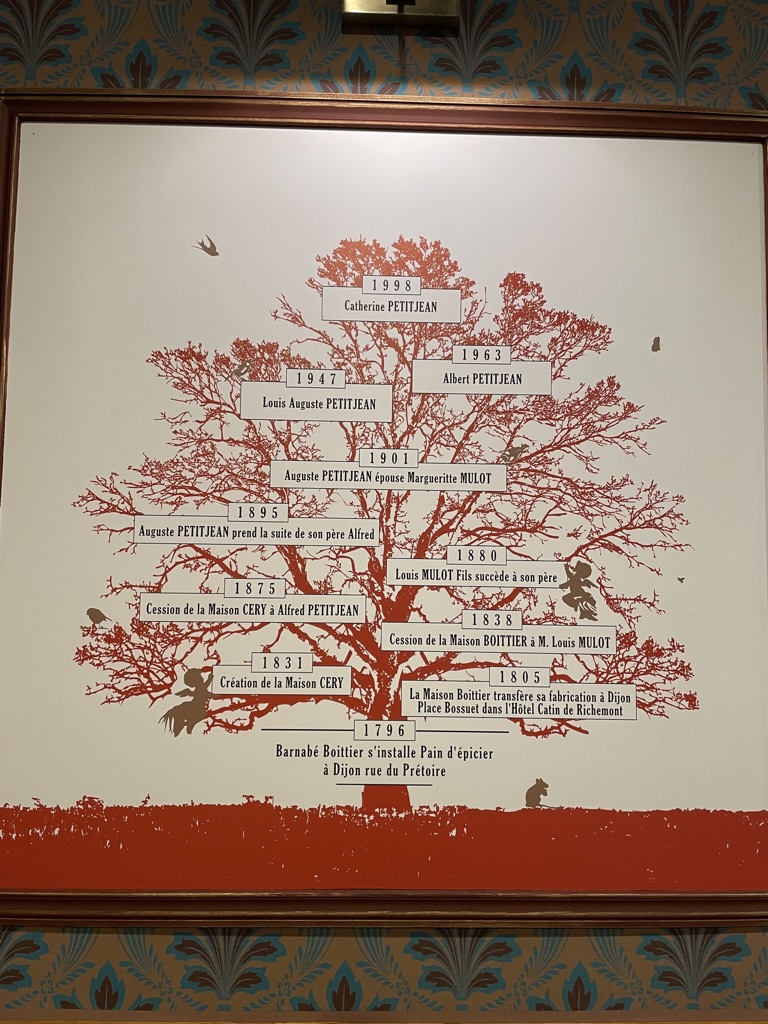
Large wooden tables invite you to linger for a tasting, but before that, you’re drawn into the story. You’re invited to walk through the family’s history and watch the process itself—one that has been carefully preserved over time. There are modern touches, of course, but everything still respects the savoir-faire passed down through generations.
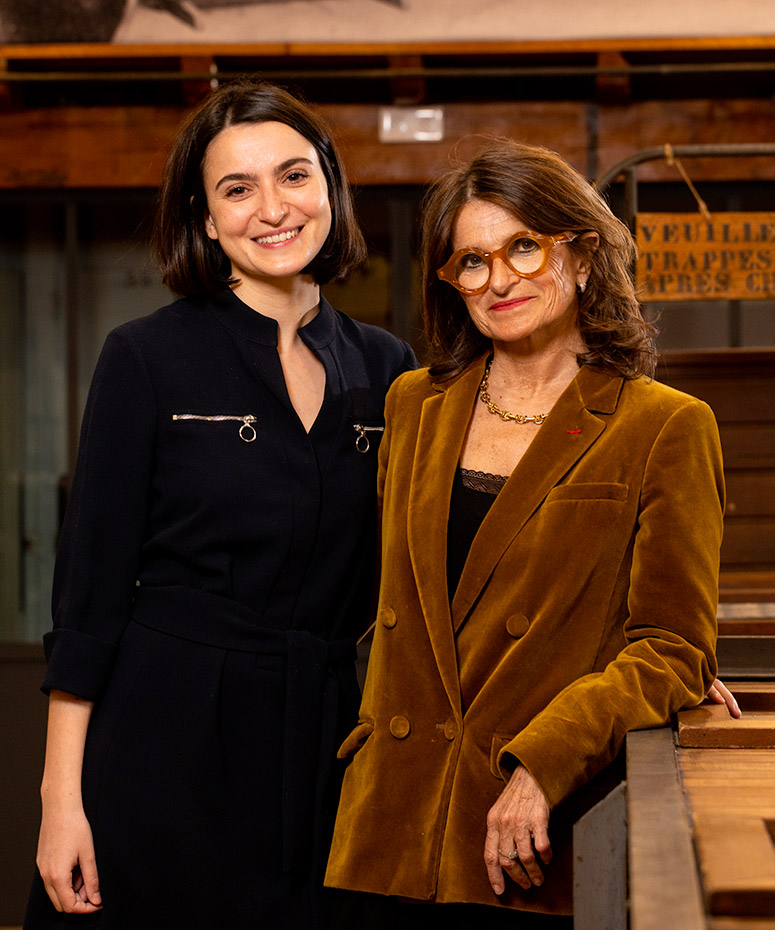
This small company of only 40 people is still family owned. If you are lucky you may cross paths with Catherine Petitjean (9th generation) or her daughter Marie Petitjean-Dugourd (10th generation). I am simply in awe that this family has continued the tradition for more than 225 years!
What Makes Pain d’Épices Different
While its tempting to equate this with American gingerbread, you’ll need to reset your expectations just a bit.
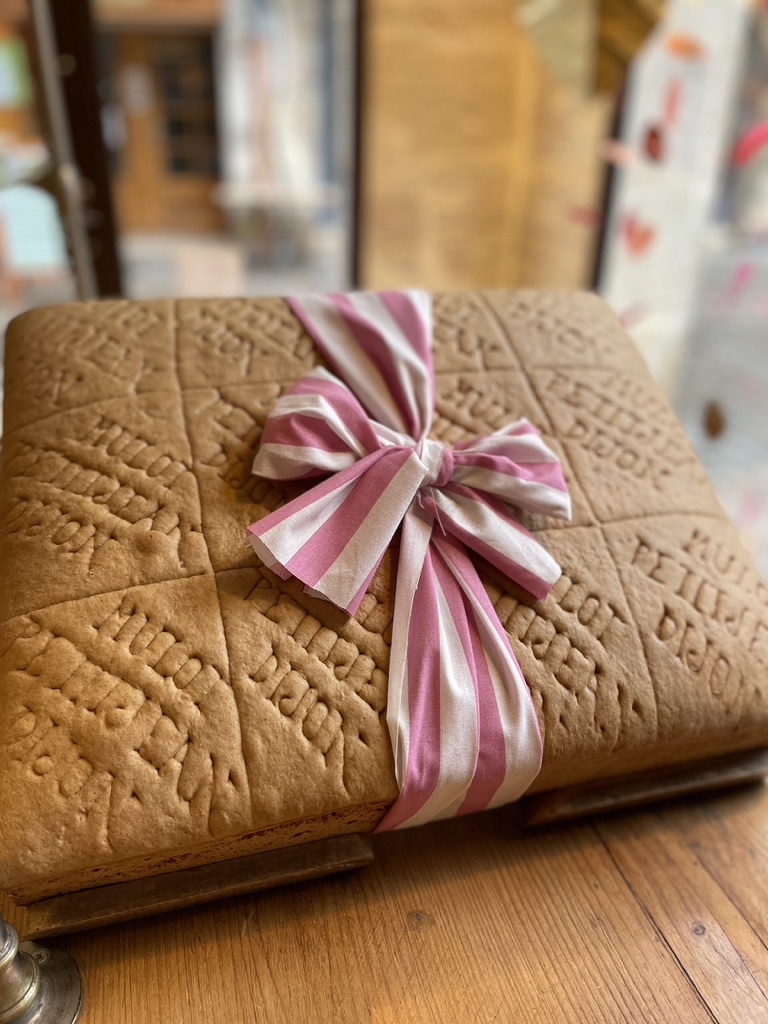
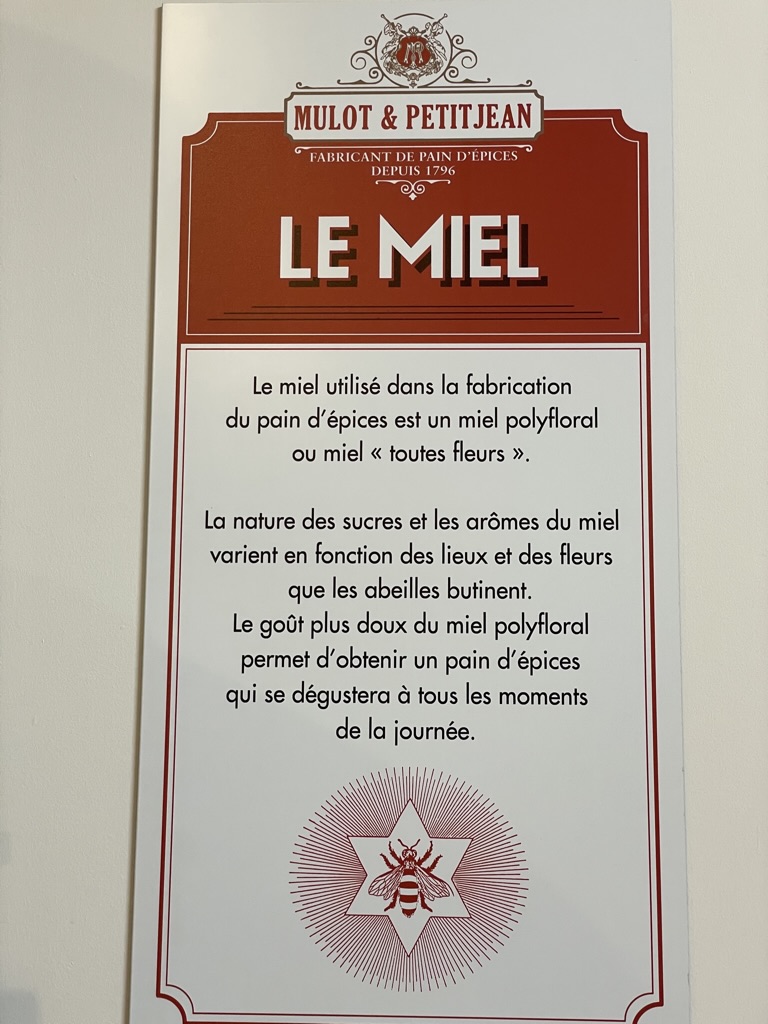
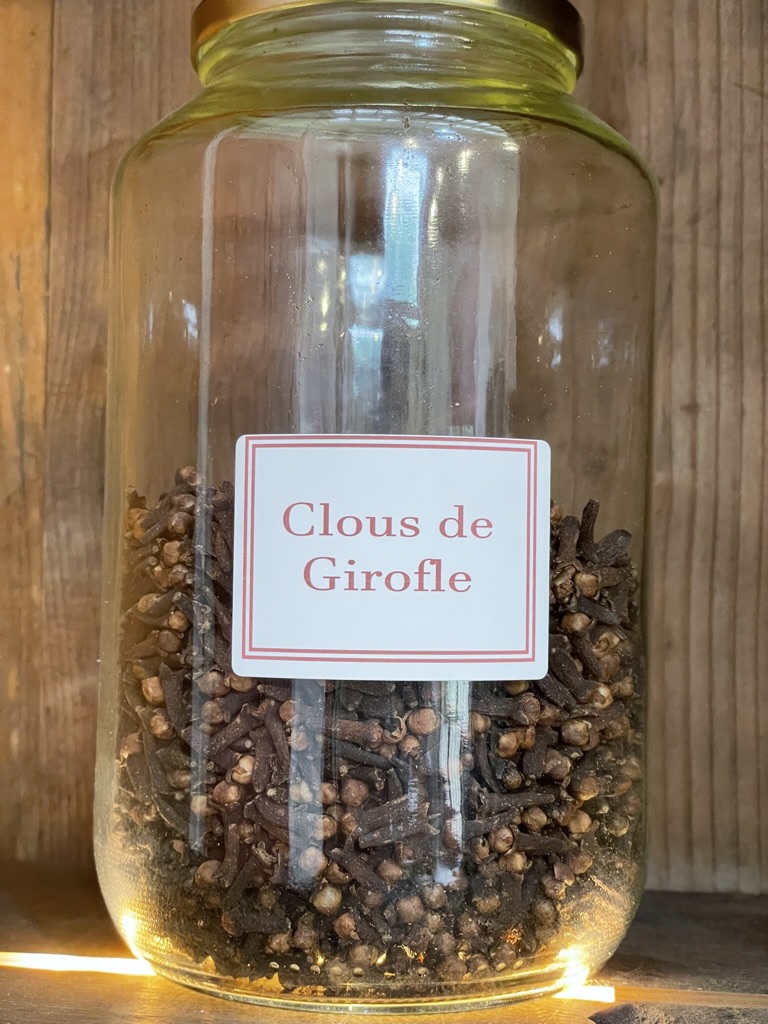
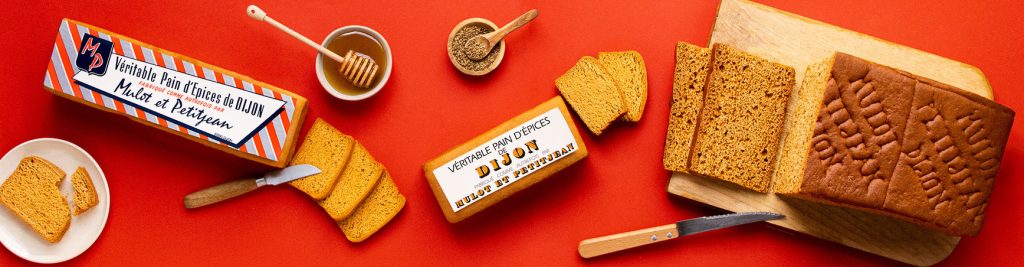
Pain d’épices is softer, more subtle, and far less sweet. Instead of molasses, it’s made with honey, which gives it a delicate, almost floral depth. The spices are there—cinnamon, clove, sometimes anise—but they don’t overwhelm. They linger quietly, creating a warmth rather than a burst of flavor.
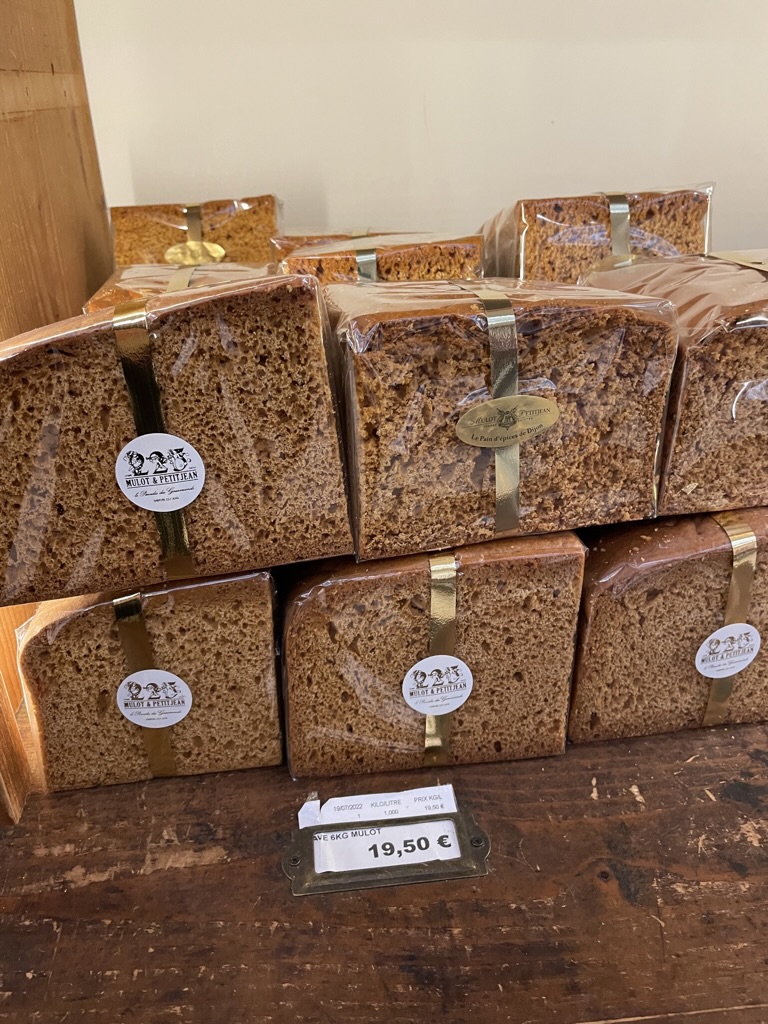
The texture is different, too. It’s more like a dense, tender loaf than a cake, meant to be sliced and savored slowly rather than frosted or dressed up.
And perhaps most surprising of all, it isn’t just a sweet treat.
In Burgundy, pain d’épices often finds its place alongside savory dishes—paired with foie gras, cheeses, or even enjoyed with a simple cup of tea in the afternoon. It moves easily between sweet and savory, which somehow makes it feel even more rooted in everyday life.
It’s the kind of thing you might not fully understand with the first bite… but then you find yourself going back for another, curious to experience it again.
A Living Tradition (Not Just a Tourist Stop)
What struck me most is that this doesn’t feel like something preserved just for visitors.
Yes, you can walk through the history, see the molds, watch the process—but it never feels staged. There’s a sense that this is simply what they do… what they’ve always done.
At Mulot & Petitjean, the recipes haven’t been reinvented to chase trends or modern tastes. They’ve been refined, respected, and passed down. The equipment may have evolved slightly over time, but the heart of it—the savoir-faire—remains unchanged.
And that’s what makes it feel so special.
In a world where so much is designed for quick consumption, this is something that has quietly endured. Not because it needed to be revived… but because it never really went away.
Why It Belongs on Your Burgundy Itinerary
Even if you don’t consider yourself a “food traveler,” this is the kind of stop that stays with you.
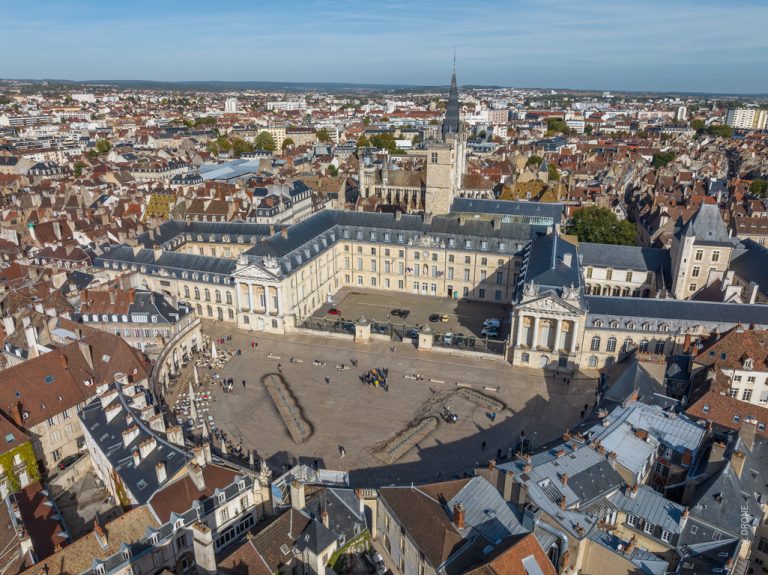
It’s easy to include as you explore Dijon—perhaps after a morning wandering through Les Halles market, or as part of an afternoon strolling through the historic center. But more than that, it adds a layer of understanding to the region.
Burgundy isn’t just about wine. It’s about tradition, craftsmanship, and the small, everyday pleasures that define life here.
You don’t need to be an expert to appreciate it. You just need to be curious.
What to Try
If you do stop in, here are a few things worth tasting:
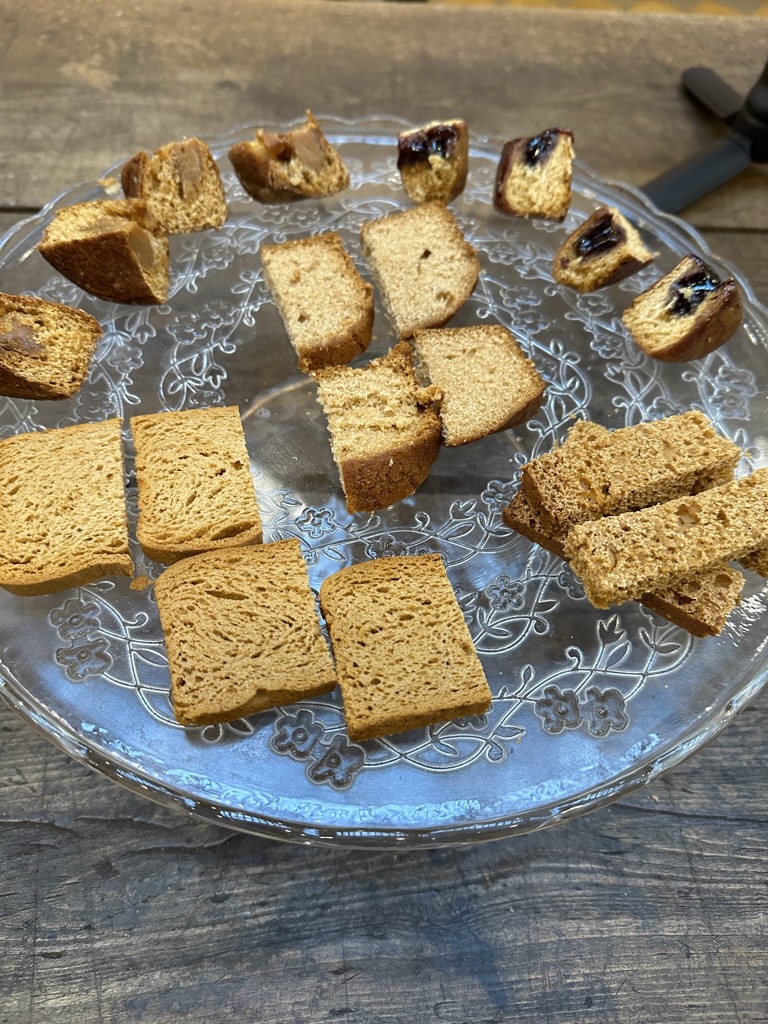
- The classic pain d’épices loaf—simple, traditional, and the best place to start
- Orange or spice variations, which add a slightly brighter note
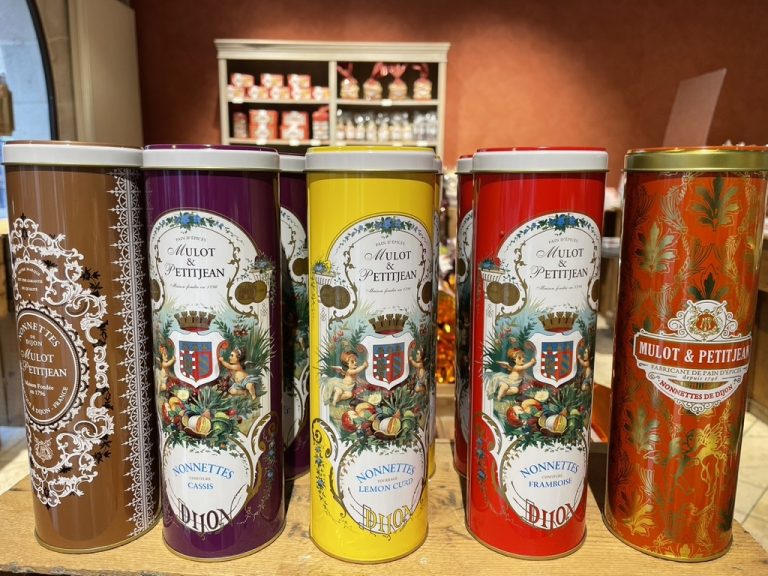
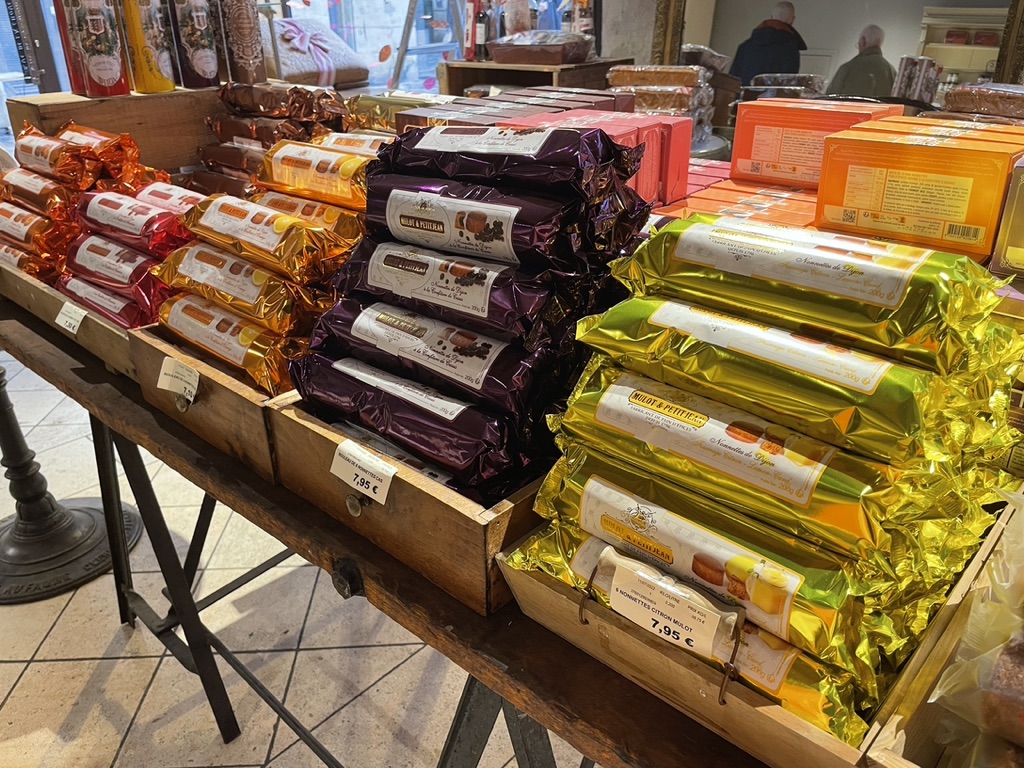
- “Nonnettes” – a twist on a jam-filled donut/muffin – orange is the classic flavor but try whatever tempts youy
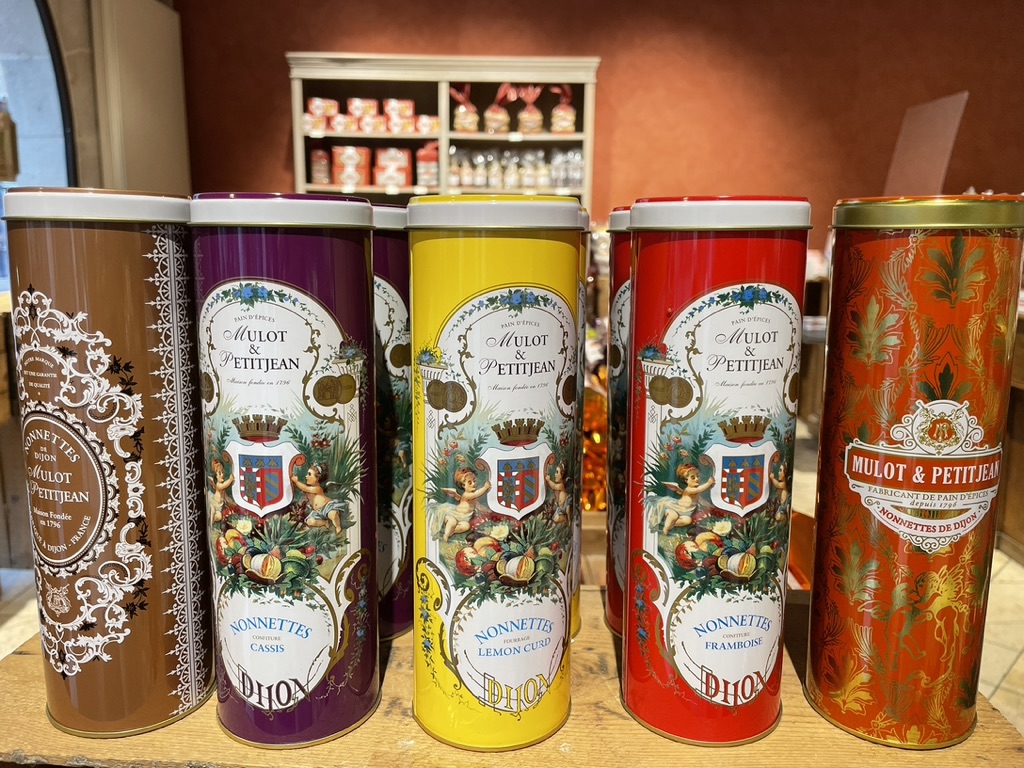
- Beautifully packaged tins, perfect if you’re bringing a taste of Burgundy home (they make great gifts!)
A Small Taste That Stays With You
Long after you leave Dijon, it’s not just the taste of pain d’épices that lingers.
It’s the feeling of that moment—the warmth of the shop, the quiet rhythm of the process, the sense that you’ve stepped into something that has been unfolding for generations.
It’s one of those small experiences that doesn’t announce itself as memorable at the time… and yet, somehow, it stays with you.
And perhaps that’s the real beauty of Burgundy.
Not the grand moments—but the ones you almost miss.
For more Burgundy specialties, check out Fallot Mustards!